Research
Respect
Protect
WHAT WE DO
Using the Foundation’s skill base and project sectors, we are able to deliver practical solutions, so as to further the ambitions of entities wishing to fulfil their greater obligations to the environment and the social good. Through our projects we are able to assist corporations and groups to deliver modules, that have a real impact on the environment but to also engage with staff and like-minded individuals who have a genuine concern to Environmental, Social & Governance (ESG).

Education
Our close collaboration with experts in the field of corals has led us to engage on global projects looking for more knowledge and data for coral survival and reef restoration. We are passionate believers that education is the best way to fully engage future generations with all the issues around the marine environment.
This has kick started our ‘Reef for Schools’ program, where we are installing coral tanks into Primary Schools, as a teaching aid that connects to the school curriculum and brings part of the ocean into their world of learning.

ESG
Future Oceans Foundation uses donation funding to create projects that actively engage with local communities, education facilities, corporate entities, research groups and NGO’s into furthering our knowledge for coral reef renovation and how that process integrates with the marine environment.
This all ties into the greater heading of Environmental, Social, Governance (ESG) that many companies (and their Shareholders) are wishing to be involved with.
OUR IMPACT
Our efforts are paying off See what we have accomplished so far:

Tanks in schools
Invested into ocean projects
Connections made
OUR PARTNERS


LATEST NEWS
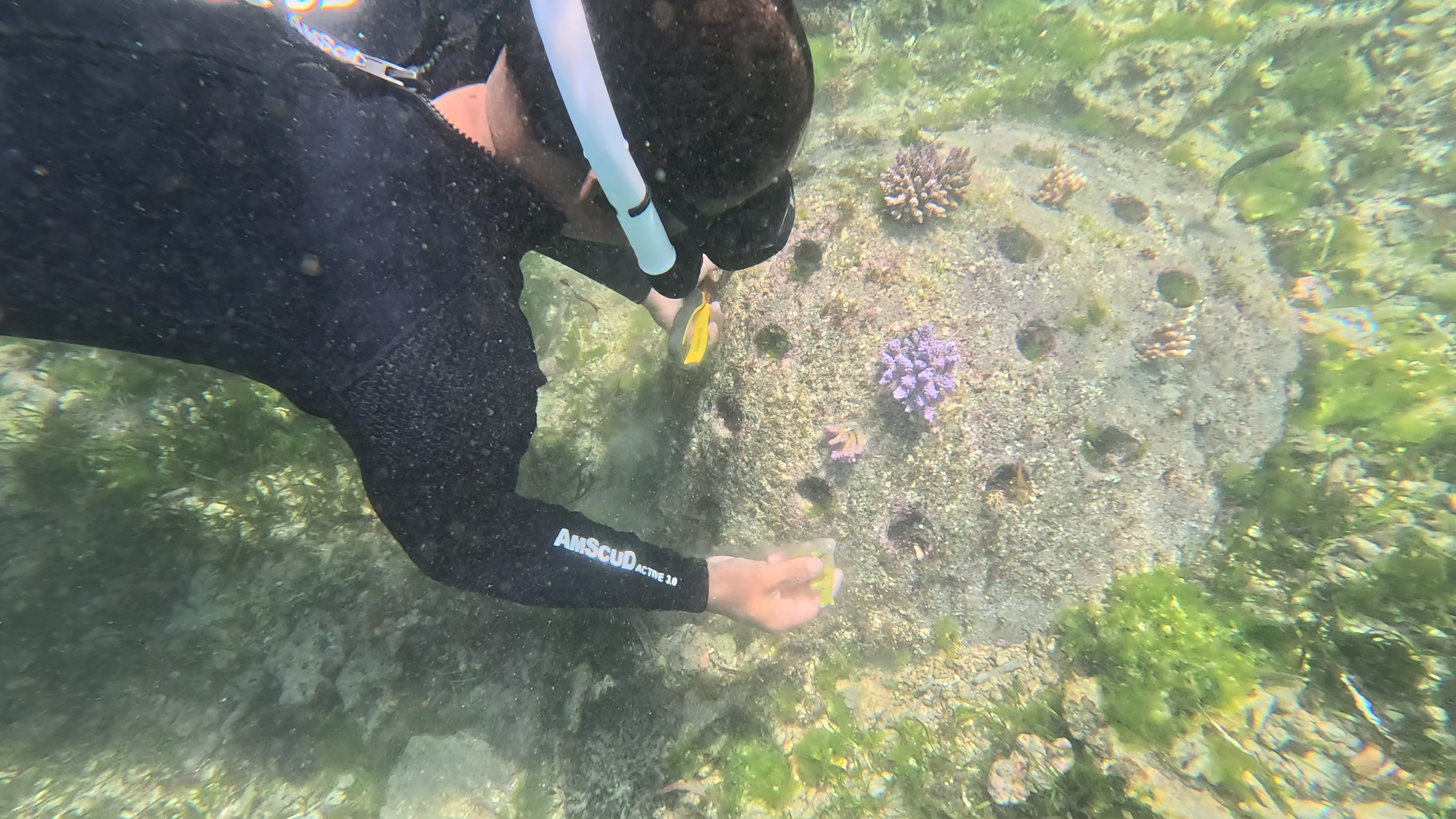
Attaching Corals to the CoralPods®
Oct 26
Corals take root on the CoralPod® in Bali
In October 2026 our team in Bali planted the first live corals onto CoralPods® on the seabed. Within days, wrasse and snowflake eels had moved in.
The CoralPod® is a modular artificial reef we developed in collaboration with Artecology. Each pod is around 750 mm across. Its surface is broken up by holes about 70 mm wide, giving fish and invertebrates places to shelter and feed. The aim is simple: give a damaged reef back the structure it has lost, then let coral and marine life rebuild on it.
From building to planting
The pods were built in Bali by local coral enthusiasts we have trained to make them. This trip, the same team took the next step and planted fragments of Acropora, a fast-growing branching coral that forms much of the structure on healthy Indo-Pacific reefs.
The key lesson came from the build itself. Smaller holes cast into the pods during construction proved the best anchor points. A coral fragment sits in the hole and is fixed with cement, giving it a stable base that holds up to water movement. Designing the attachment point into the pod, rather than adding it afterwards, makes planting faster and more reliable.
Life arriving early
We didn't expect to see residents this soon. Wrasse were working the pod surfaces, and snowflake eels had already taken up the larger holes. It's an early sign that the design is doing what it was meant to do: provide habitat from day one, before the corals have even grown.
What's next
We will keep monitoring coral survival and growth, and record which species use the pods over the coming months. This work feeds into a wider research programme comparing reef restoration designs. As always, we'll share what goes well and what doesn't.
Thanks to the Bali dream team for their skill, energy and good humour in the water, and to Artecology for their partnership on the CoralPod®.
Research. Respect. Protect.