Attaching Corals to the CoralPods®
Oct 26
Corals take root on the CoralPod® in Bali
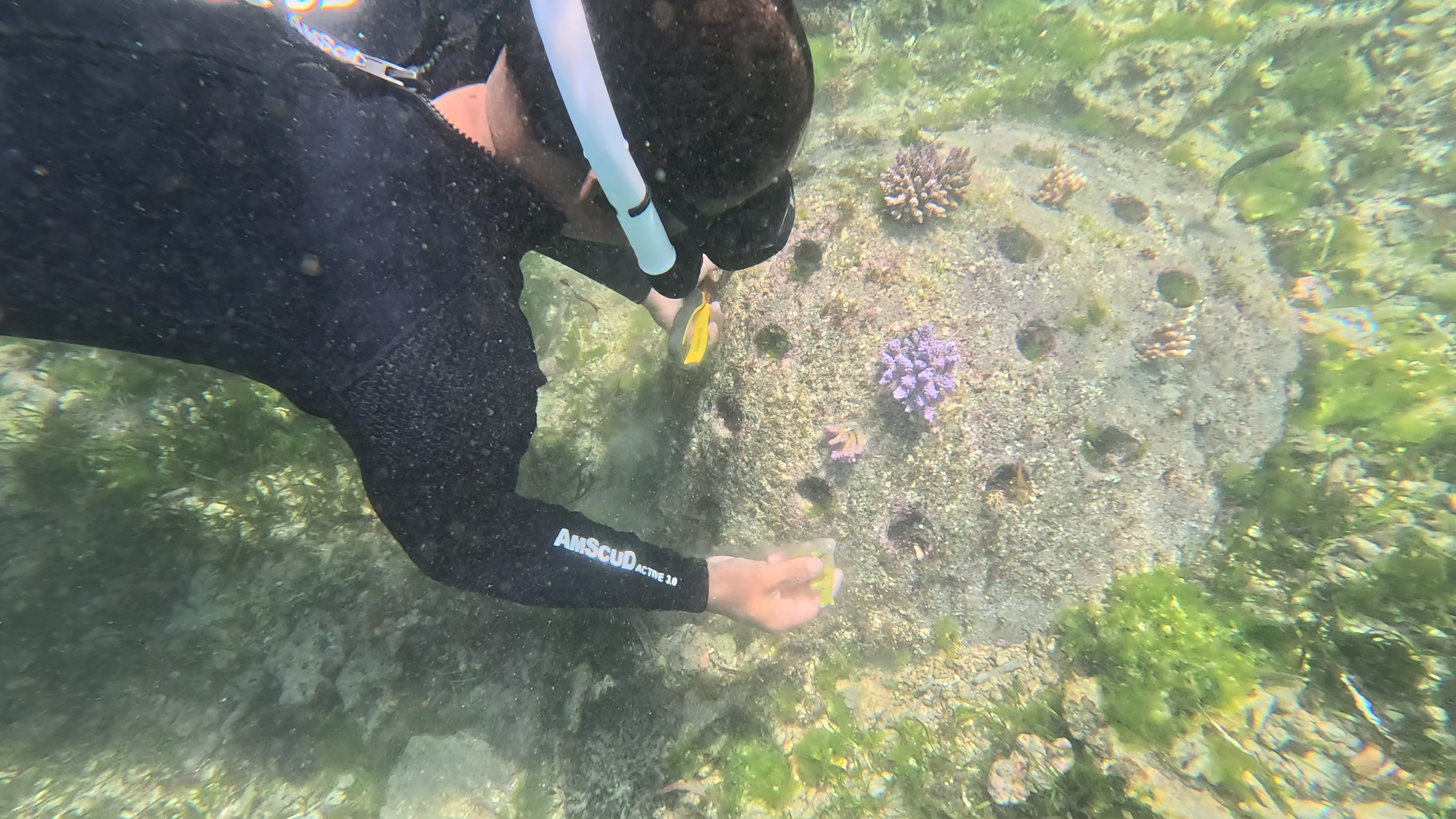
In October 2026 our team in Bali planted the first live corals onto CoralPods® on the seabed. Within days, wrasse and snowflake eels had moved in.
The CoralPod® is a modular artificial reef we developed in collaboration with Artecology. Each pod is around 750 mm across. Its surface is broken up by holes about 70 mm wide, giving fish and invertebrates places to shelter and feed. The aim is simple: give a damaged reef back the structure it has lost, then let coral and marine life rebuild on it.
From building to planting
The pods were built in Bali by local coral enthusiasts we have trained to make them. This trip, the same team took the next step and planted fragments of Acropora, a fast-growing branching coral that forms much of the structure on healthy Indo-Pacific reefs.
The key lesson came from the build itself. Smaller holes cast into the pods during construction proved the best anchor points. A coral fragment sits in the hole and is fixed with cement, giving it a stable base that holds up to water movement. Designing the attachment point into the pod, rather than adding it afterwards, makes planting faster and more reliable.
Life arriving early
We didn't expect to see residents this soon. Wrasse were working the pod surfaces, and snowflake eels had already taken up the larger holes. It's an early sign that the design is doing what it was meant to do: provide habitat from day one, before the corals have even grown.
What's next
We will keep monitoring coral survival and growth, and record which species use the pods over the coming months. This work feeds into a wider research programme comparing reef restoration designs. As always, we'll share what goes well and what doesn't.
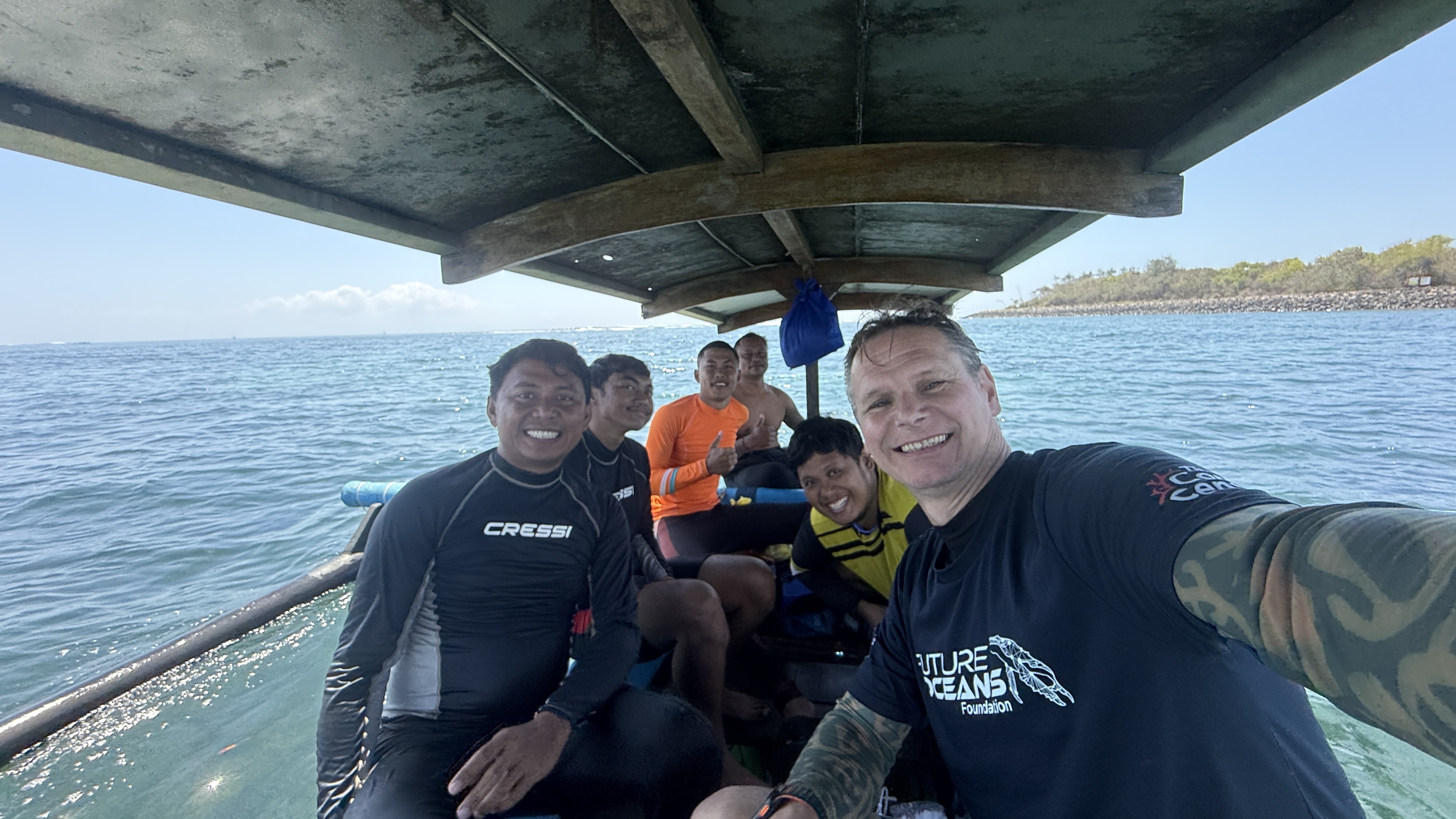
Thanks to the Bali dream team for their skill, energy and good humour in the water, and to Artecology for their partnership on the CoralPod®.
Research. Respect. Protect.